Your three functions are not arguing because they dislike each other.
They are arguing because each of them owns a different version of the truth — and nobody ever gave them the same words for cost, risk and time. AI has just changed what those words mean. The Bridge teaches the decisions product, engineering and data have to make together.
An academy built around one boundary, not one discipline.
Product courses teach discovery and prioritisation and stop at the API boundary. Engineering leadership courses teach one-to-ones and org design and stop at the customer boundary. Data courses teach tooling and stop at both.
The Bridge starts exactly where those three stop: at the decisions that need all of them in the room. Workshops, programmes, mentoring and advisory — taught live, on demand, by someone who currently holds the seat.
AI is the frame, not a module
Every subject opens on what actually changed, then teaches the fundamental you now need in order to judge what a machine produced. Abundance moved the bottleneck; it did not remove it.
Nothing is pre-recorded
Every session is live and on demand. A session where nobody can ask a question is a video, not training.
What I run
Three flagship days, a programme format, and a small amount of one-to-one work. Everything is assembled from the same catalogue, so a workshop and a programme are the same material at different depths.
For teams and organisations
The Bridge
One day that ends the argument between product and engineering.
The Three-Way Bridge
The same day, with the data team in the room.
The AI-Native Manager
What actually changed about managing, and what did not.
Team programmes
Six to ten weeks that change how a team works, not just how it talks.
Executive briefing
Ninety minutes with the people who sign.
Advisory
An outside read on how your functions actually work together.
For individuals
Thirty-four modules. Two hundred and thirty-six lectures. One argument.
Everything I run is assembled from a single catalogue across five tracks — an AI-native core that everyone crosses first, then product, technology, data, and the bridge between them.
Roughly a third of it is about what AI changed. The other two thirds are the fundamentals that changed value rather than changing content — because when a machine can produce a plausible artefact in seconds, the scarce skill stops being production and becomes judgement.
- Modules
- 34
- Lectures
- 236
- Tracks
- 5
- Teaching hours
- ~73
Every module runs three beats: what changed, then what holds, then what is yours. The fundamentals are interleaved with the AI material rather than separated from it, so nobody can take the exciting half and skip the load-bearing one.
Someone who currently holds the seat.
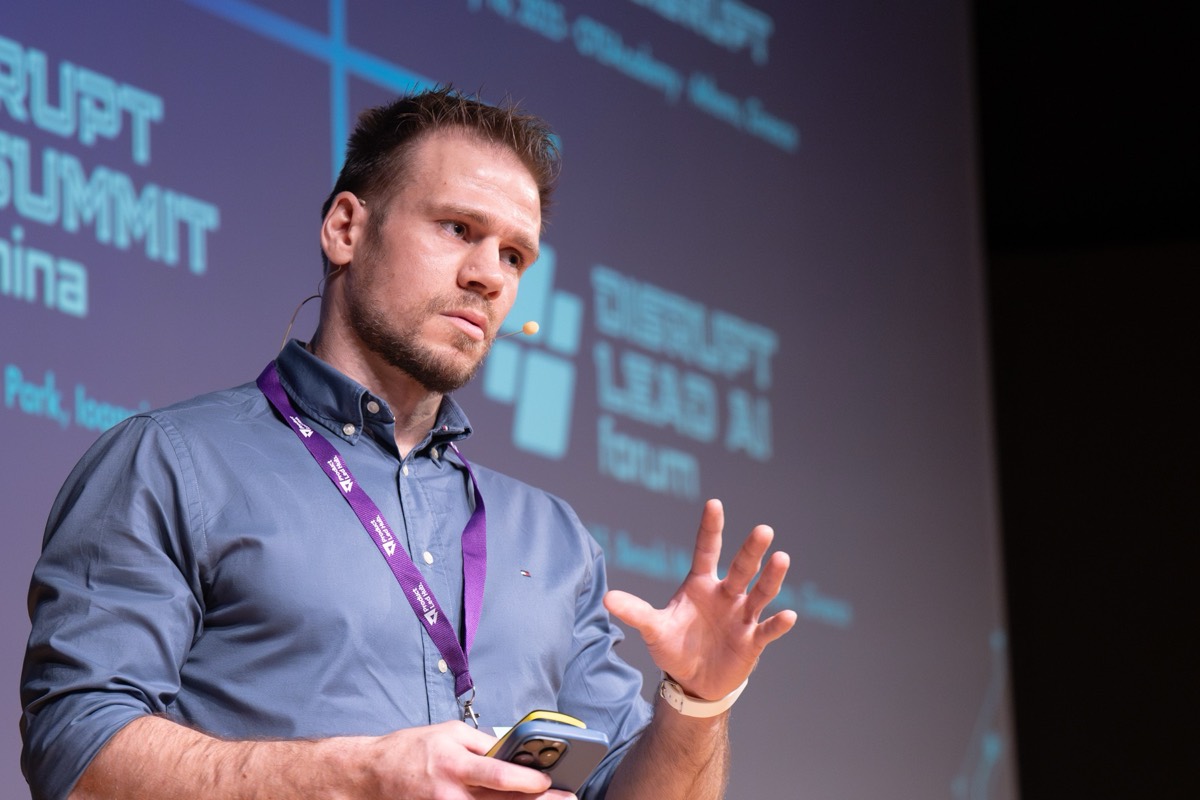
I have been a developer, a scrum master, a product manager, a product director and a CTO — three of them at the same company, at the same time. Today I lead technology at a SaaS company: product, engineering and data as one organisation.
That is the whole argument for this academy. Full-time trainers describe a job they left. I am Ioannis Papikas, and the material is drawn from a job I am still doing.
Practical artefacts you can use without buying anything
Five out now, and one a month after that: the architecture cheat sheet, the estimate conversation, the health check, the decision-rights map and the AI readiness checklist. No email, no form — they download. (The two documents about the academy itself do ask for an address.)
Start with a conversation.
Thirty minutes, no deck. You describe what is going wrong between your functions; I tell you whether I can help and how.